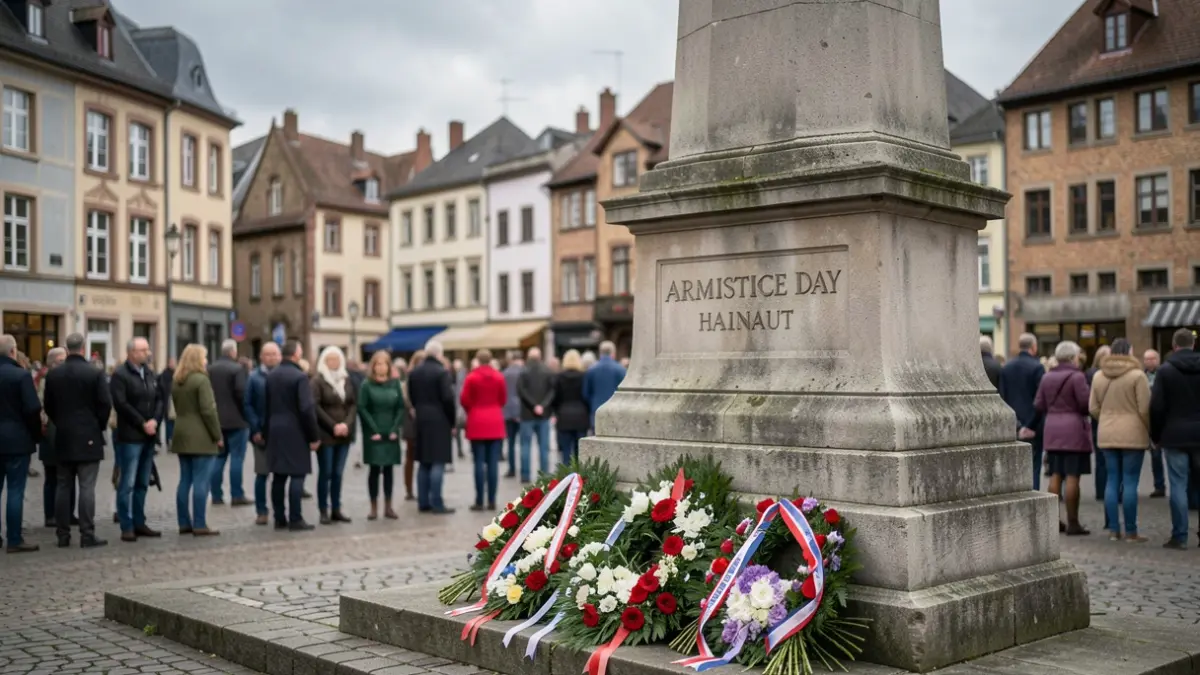
Following the Bailleul walk, the committee 'Estaimpuis, village par village' continues its work creating thematic walks and will soon inaugurate its 'Chemins de la Mémoire' (Paths of Memory). This route aims to uncover the history of the villages within the municipality during the period of the two World Wars. Philippe Michiels, a historian leading the project, explains the initiative.
The 'Chemins de la Mémoire' are a trail designed to guide visitors to sites that commemorate the commitment of past generations to freedom. The tragic events of the two World Wars, which occurred not so long ago, impacted the area, as elsewhere, through invasion, occupation, and liberation. Visiting these locations fosters a sense of historical duty and the importance of understanding past events to inform present-day decisions.
Walkers, cyclists, and history enthusiasts will discover memorials and cemeteries honoring soldiers and resistance fighters, as well as sites of significant events. During World War I (1914-1918), this includes the dynamiting of Néchin church and the Espierre canal bridges, along with a German airfield in Néchin. For World War II (1940-1945), notable events include the British blowing up bridges over the Espierre canal in May 1940, combat in Estaimpuis and the bombing of Estaimbourg, resistance actions in Saint-Léger, the crash of an American P38 in Evregnies in 1944 with its pilot rescued by the resistance, and the battles of Saint-Léger on September 3, 1944, among other anecdotes.
The municipality of Estaimpuis boasts a rich history, featuring sites such as the Temple farm in Saint-Léger (13th century), the Château de la Royère in Néchin (11th century), the Château de Bourgogne in Estaimbourg (1854), and ancient farms like Sotru and la Beuvrière in Bailleul (14th-15th centuries) and the Motterie farm (17th-18th centuries) in Leers-Nord. The local churches, many dating from the 11th to the 19th century, are also historical witnesses and have often suffered from regional conflicts, including the Wars of Religion in 1566 and the battles between France and the League of Augsburg in 1693, which led to the burning of several churches and villages.