The official statement conveys shock at the chosen perimeter, which directly affects the areas between Moulbaix and Autreppe, as well as the sections of Arbre and Gibecq. The municipality fears its villages 'will be disfigured'.
In response, the Council is demanding that the Walloon Government and Elia promptly provide all documents justifying this route, which is deemed detrimental to the territory. Local authorities wish to know the technical, environmental, and landscape criteria that motivated this choice, as well as the precise expected impacts on residents, agricultural operations, heritage, and land use planning.
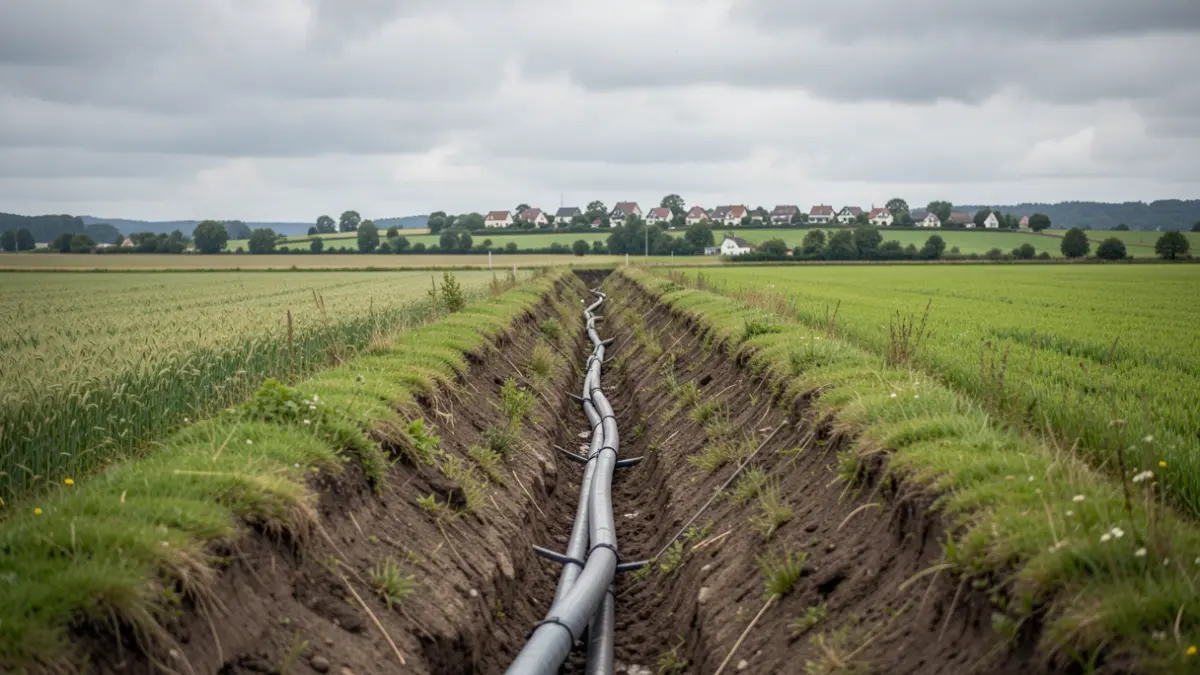
Deep disappointment is expressed regarding the limited consideration given to the opinions of the CCATM and the Communal Council. The fact that the Walloon Government is only announcing a minimum of 8 kilometers of underground cabling for a project of approximately 85 kilometers is described as a 'real denial' and remains 'unacceptable' to the local authorities, the CCATM, and Revolht.
The Council asserts it will use all legal and democratic avenues to voice the necessity of burying the line within Athois territory. The proposed compensation mechanisms are also found to be disappointing, contrasting with earlier announcements of 1 million euros per kilometer.
A formal presentation of the consequences for Ath and the reasons behind the partially buried solution is urgently requested. The issue of undergrounding is considered crucial, particularly due to the sometimes short distances between homes and the power line.
“"Possunt quia posse videntur: they can because they think they can."
The Municipal Council calls for massive mobilization for the public inquiry scheduled for the first half of 2027, emphasizing that everyone can participate.