Each year, the Sambre & Affluents River Contract works on the ground to slow the progression of invasive exotic species that threaten our waterways and natural environments. This season again, teams, aided by partners and 4 students, conducted numerous management and inventory operations across the entire Sambre basin. The CRSA reminds the public of European and Walloon lists of prohibited species and encourages citizens to report any suspicious plants.
Regarding Giant Hogweed, controls continued on the 72 historical sites recorded. Good news: 39 sites are now considered eradicated. The CRSA coordinates the management of the 38 active sites and supports communes, managers, and partners with training, biosecurity equipment, and awareness materials. Two new outbreaks were detected and managed between 2025 and 2026, highlighting the importance of vigilance.
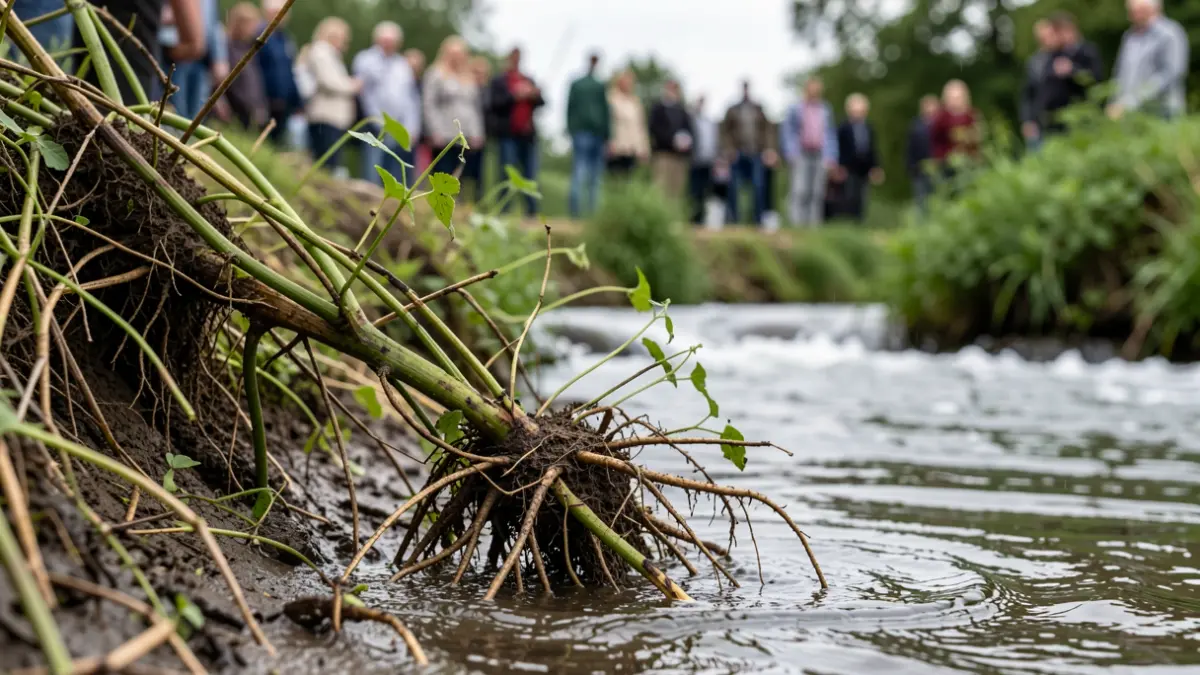
For the Himalayan Balsam, four students reinforced the team to inventory and uproot the plant along 246 km of waterways in 21 communes. The plant was recorded on 98 km, where uprooting operations were carried out, bringing the distance where it is no longer present to 148 km. A cross-border collaboration with the Avesnois Regional Natural Park also took place for management on the French part of the Hantes.
Other invasive aquatic species are under surveillance. Five sites are undergoing active manual uprooting management, including Water Pennywort, Lagarosiphon, and Dense-flowered Waterweed. Six other sites are under surveillance, with species no longer observed this year. Three sites are subject to management tests and preliminary studies.
Inventories conducted this summer allowed for visits to 79 water bodies, 17 of which presented at least one invasive exotic species such as Jussie, Azolla, Water Pennywort, or Chinese Pepper. The CRSA invites citizens to participate in management efforts and report any invasive plants.