Hainaut Développement has released the 2026 edition of its socio-economic brochure, "Le Hainaut en cartes et en chiffres." This document provides an in-depth analysis of the province's territorial dynamics and challenges.
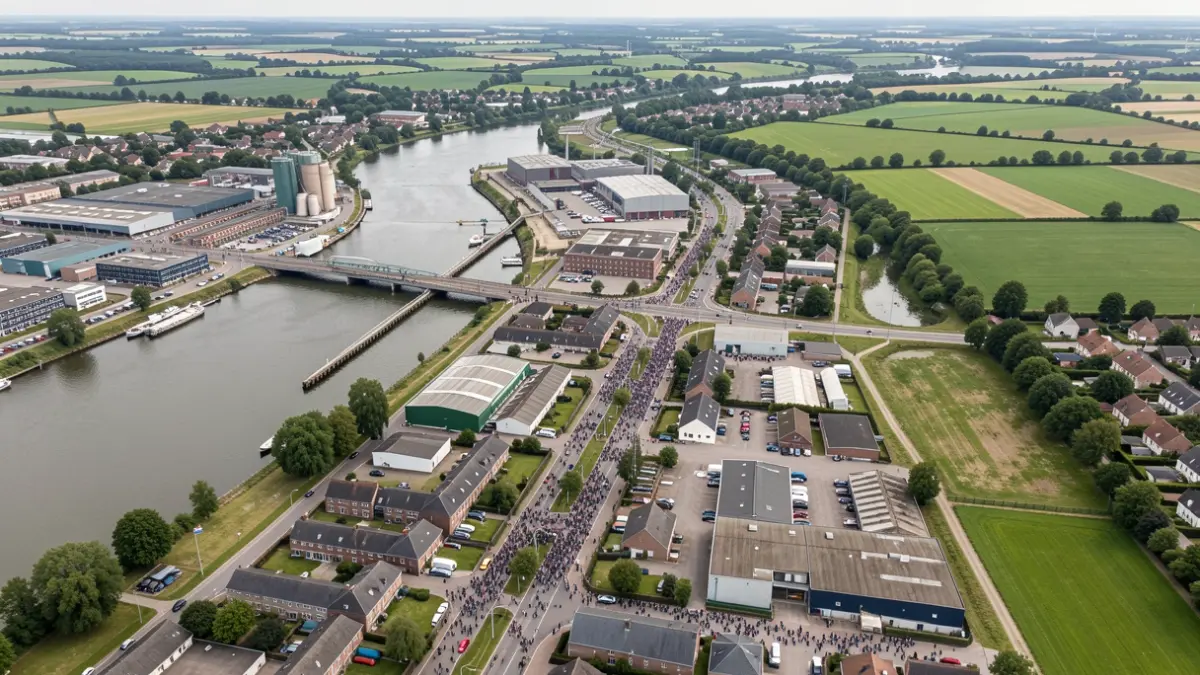
As of January 1, 2026, Hainaut has 1,368,562 inhabitants, confirming its status as the most populated province in Wallonia. Urbanization is concentrated along the former industrial axis of Mons–La Louvière–Charleroi, while the north and south retain a more rural character.
Demographic growth, while positive, is slowing. The natural balance has been negative since 2012, offset by a positive migration balance. Projections indicate a population growth of + 2.2% between 2025 and 2045, exceeding the Walloon average. Rural and peri-urban municipalities are gaining inhabitants, unlike some isolated border communes.
The population aged over 65 is the main driver of demographic growth, while those under 20 are in continuous decline. The aging index could exceed 100 by 2030, posing challenges for social system financing.
The median house price stands at €190,000 in 2025, with widening disparities between municipalities. A €1,000 increase in median annual income is associated with a €16,079 rise in the median house price. Hainaut's median income remains below the Walloon and Belgian averages.
Hainaut's economy is increasingly service-oriented, though industry remains a pillar. The province lags behind other Belgian provinces in entrepreneurial density, business growth, productivity, and R&D investment. The presence of jobs in high-tech sectors is limited.
Employment rates and internal employment ratios are below Walloon and Belgian averages. Salaried jobs are concentrated in major municipalities such as Charleroi, Mons, Tournai, La Louvière, Mouscron, and Ath.
The employment situation in 2025 is unfavorable: salaried jobs decreased by 0.3%, while unemployed job seekers increased by 9.6%. FOREM job offers dropped by 32.7%.
The rate of land artificialization has been increasing since 2020, particularly in attractive rural areas. Renovation of existing buildings and redevelopment of industrial brownfields are key levers to achieve the 'net zero artificialization' goal by 2050.