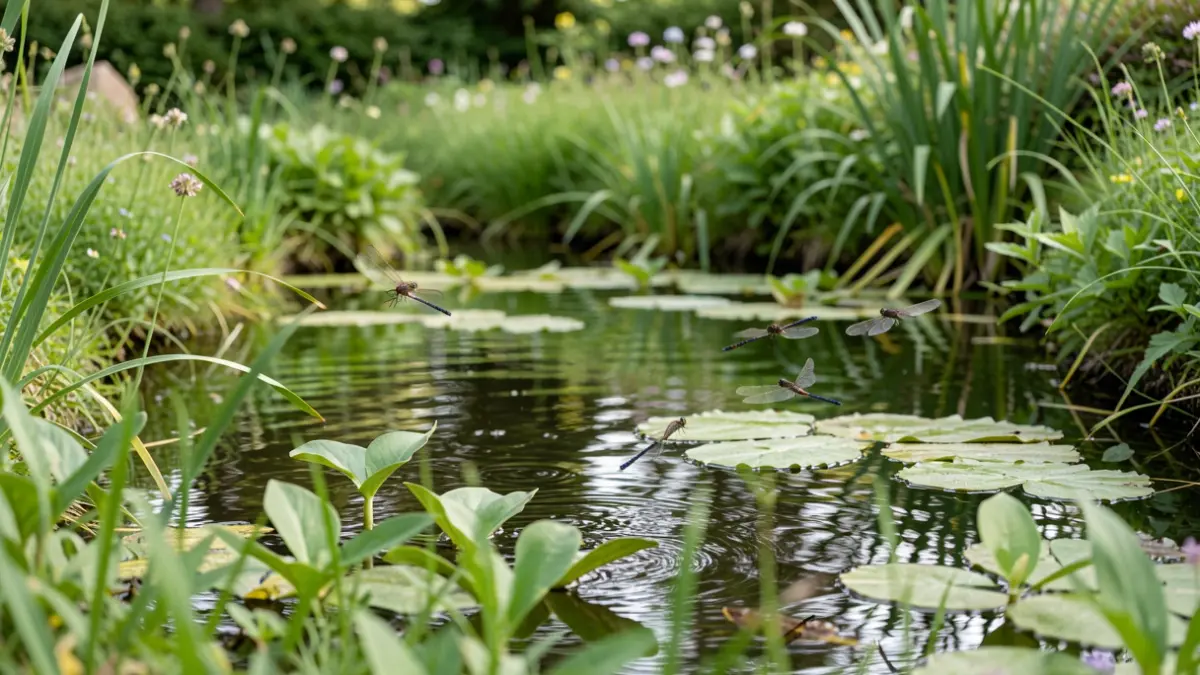
These ecological ponds, a result of the cross-border Interreg ARC project (Actors for Climate Resilience), play a crucial role in addressing climate change. They act as buffers against extreme weather events, absorbing excess water during heavy rains to combat flooding, while maintaining coolness and humidity during droughts.
Serving as true biodiversity refuges, these water bodies provide an ideal habitat for local flora and fauna. Dragonflies, amphibians, birds, and aquatic plants find sustenance and breeding grounds here, contributing to the ecosystem's richness.
The project aims to interconnect these wetlands to facilitate species movement and strengthen the overall health of the local ecosystem. It brings together France, Wallonia, and Flanders to implement concrete, nature-based solutions, with the goal of building a greener and stronger territory.
To learn more about the actions undertaken, visit the website: interreg-arc.eu.