
On the occasion of the commemorations of the 1918 Armistice, a call is being made to the residents of Ath. A Normandy woman is carefully preserving correspondence exchanged during the four years of the Great War between a Belgian soldier from Ath and her great-grandfather's elder sister. Through her research, she has managed to trace the soldier's journey; he survived the conflict and reportedly never married. The latest information she has indicates he was still living in Brussels in 1944. His name is Émile Becq, born March 21, 1894.
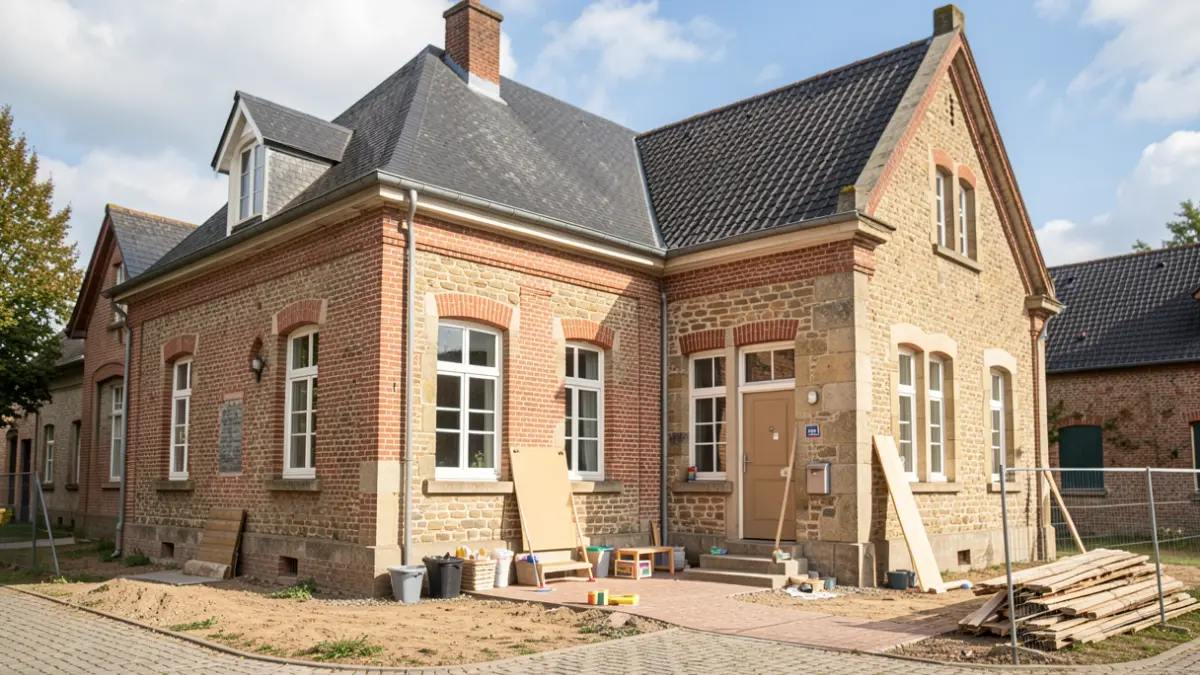
This Normandy woman's family has carefully kept the house where her great-aunt and Émile first met. It is in this Norman house, located near the D-Day landing beaches of June 1944, that the letters have traversed generations and the trials of time. Their preservation is almost miraculous, especially since this house could have disappeared. Could there still be a descendant, a family member, or a relative of Émile Becq in Ath who holds the other part of this correspondence, namely the letters his great-aunt sent him in return? Perhaps these precious testimonies are still lying in a drawer?
Émile Becq was born on March 22, 1894, in Ath. His father was a railway employee, and he was an only child. He provided this summary of the beginning of his 14-18 campaign in a letter to the king: 'On October 1, 1914, I left the city of Ath, occupied by the Germans since August 22. After many difficulties and at the peril of my life, I crossed the German lines and enlisted in Ghent the same day. I was assigned to the class of 1914 contingents and, after a few months of training, took my place at the front.' The training took place in France, in Normandy, and particularly in the small village of Sommervieu near Bayeux.
There, our correspondent imagines that the inhabitants were asked to host the soldiers, perhaps to maintain their laundry, to 'sponsor' them in a way. It was in this context that Émile met Marcelle, born on the same day as him. From this meeting, a regular epistolary exchange began, which gradually gave rise to a deep complicity, then transformed into a romance. Émile was wounded, returned to the front, where he was taken prisoner in 1918. The correspondence ends in January 1919.
Mrs. Loret, Marcelle's great-niece, inherited this precious correspondence, which has spanned over a century and two world wars. The letters were found in the Norman family home, liberated by British troops on the evening of June 6, 1944. Their preservation, through events and decades, is almost miraculous. Today, she hopes that members of Émile Becq's family, perhaps distant cousins living in Ath, have also kept the letters that Marcelle sent him. A discovery that would allow the two parts of this correspondence to be reunited and complete a beautiful human story born in the heart of the Great War.
If you are concerned by this story, please use the following address to contact our correspondent: emilebecqath@gmail.com